
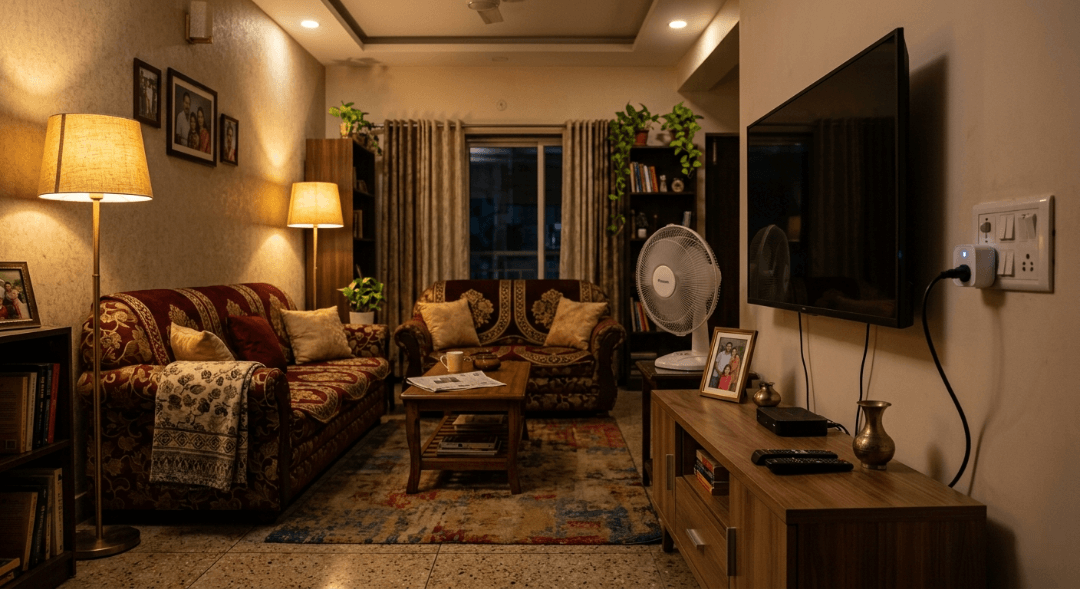
Most people don’t realize this until the electricity bill hits ₹6,000 in peak summer: your house is quietly leaking money every single day. Not in dramatic ways. No sparks, no obvious faults. Just tiny, constant waste — lights left on, appliances drawing power, ACs running inefficiently, water heaters behaving like they own your salary. That’s where smart home gadgets that actually cut bills start making sense. Not the flashy, overpriced nonsense you see on Instagram. I’m talking about the stuff that pays you back. And no, you don’t need a luxury villa in Nice for this. A 2BHK in Lucknow works just fine. smart home gadgets that actually cut bills
The Myth: Smart Homes Are Expensive Toys
Let’s clear this first.
Most people still think “smart home” means voice-controlled curtains and RGB lights that change color during dinner.
That’s not what saves money.
The truth? The smartest gadgets are the boring ones.
The ones that:
- Turn things off when you forget
- Track where electricity is being wasted
- Adjust usage based on real behavior
I learned this the hard way after spending money on a fancy smart speaker… which did absolutely nothing for my bills.
Smart Plugs: The ₹1,000 Device That Changes Everything
If you buy just one thing from this article, make it a smart plug.
Here’s what surprised me: most appliances consume power even when they’re “off.” TV, microwave, router, even your charger. smart home gadgets that actually cut bills
It’s called phantom load. And it adds up.
A smart plug cuts power completely.
But the real magic is tracking.
You can actually see:
- How much your fridge consumes daily
- Which device spikes your bill
- When something is behaving abnormally
I once found my old geyser was pulling power even when idle. That one fix saved around ₹700/month.
Not dramatic. But over a year? That’s a decent weekend trip.
Maybe even enough motivation to finally plan that escape after reading something like this Annecy travel guide.
Smart Thermostats (or AC Controllers): Where the Real Savings Happen
In India, your biggest electricity expense is almost always cooling.
ACs don’t just consume power — they overconsume because we use them badly.
Set it to 18°C. Forget to turn it off. Run it all night even when it’s not needed.
A smart AC controller fixes behavior, not just temperature.
It learns:
- When you’re home
- How quickly your room cools
- When to switch off automatically
Some even adjust based on weather.
And here’s the kicker: a 1–2°C adjustment can reduce energy consumption by 6–10%.
That’s not theory. That’s straight from energy efficiency studies like those referenced by Energy Saver by the U.S. Department of Energy.
In real terms, that could shave ₹1,000–₹2,000 off summer bills.
Smart Lighting: Not About Mood, About Discipline
People buy smart lights for aesthetics.
Wrong reason.
The real benefit is automation.
Lights turning off when no one’s in the room.
Schedules based on your routine.
Remote control when you’ve already left home and suddenly panic: “Did I turn everything off?”
I’ve done that. Too many times.
Smart lighting doesn’t save huge amounts individually. But across months, across rooms, across habits — it stacks.
Especially if you still have older bulbs anywhere.
Also, it quietly forces discipline. And that’s where savings really come from.
Water Heaters: The Silent Bill Killer Nobody Talks About
This one is criminally underrated.
Water heaters (geysers) are among the biggest energy hogs in Indian homes.
And we use them lazily.
Switch on. Forget. Leave it running longer than needed.
A smart switch or timer changes that instantly.
You can:
- Schedule heating only when needed
- Turn it off remotely
- Limit heating duration
Some advanced systems even track usage patterns.
I reduced my geyser usage by nearly 40% without feeling any difference in comfort.
That’s the kind of saving most “top 10 gadget” lists never talk about.
Energy Monitoring Systems: The Truth Hurts (But Saves Money)
This is where things get uncomfortable.
Because once you install a whole-home energy monitor, you can’t ignore the truth anymore.
You see exactly:
- Which appliance is costing you money
- What time your usage spikes
- Where your habits are wasteful
It’s like checking your bank statement after a careless month.
Painful. But necessary.
Most people guess where their electricity goes.
They’re usually wrong.
And once you know the truth, you start making better decisions.
That awareness alone reduces bills.
Smart Homes in Real Life (Not Instagram)
Here’s what most articles don’t say:
You don’t need everything.
A few smart choices beat a fully automated house.
If I were starting fresh today, I’d do this:
- Smart plugs for heavy appliances
- AC controller for cooling
- Timer/switch for geyser
- Basic smart lights in high-use rooms
That’s it.
No fancy voice assistants required.
And no, you don’t need to turn your home into something you saw while browsing hidden French Riviera spots.
Even simple apartments benefit.
The Hidden Benefit: Less Mental Load
This part surprised me the most.
Saving money is great.
But the real win? You stop thinking about small things.
Did I switch off the geyser?
Are lights still on?
Is the AC running unnecessarily?
Smart systems quietly handle that.
And that mental space? It’s worth something.
Maybe even more than the money saved.
Why Most People Still Don’t Do This
Two reasons.
First, upfront cost.
Even though most devices recover their cost in months, not years.
Second, inertia.
People don’t change habits unless something breaks.
Unfortunately, electricity bills rarely feel “urgent” enough.
Until they do.
Especially in peak summer or winter.
Smart Homes and Travel Mindset (Yes, There’s a Connection)
This might sound odd, but hear me out.
When you travel — say you’re figuring out the best time to visit France or planning your days around the Loire Valley castles — you become more aware of how you use time and money.
Smart home gadgets bring that same mindset into daily life.
Not in a rigid way. Just quietly efficient.
FAQs
Do smart home gadgets really reduce electricity bills?
Yes, but only the right ones. Devices that automate usage and track consumption actually reduce waste. Decorative gadgets don’t.
How much can I realistically save?
Depends on your home, but ₹1,500–₹3,000 per month is very possible with AC control, smart plugs, and geyser management.
Are smart devices hard to install?
Most are plug-and-play. Smart plugs and bulbs take minutes. AC controllers and energy monitors might need basic setup.
Do I need fast internet for this?
Stable Wi-Fi helps, but most devices work even with average connections. Once set up, they run automatically.
One Thought Before You Close This
A smart home isn’t about impressing guests.
It’s about quietly fixing the small leaks in your life.
Money leaks. Energy leaks. Attention leaks.
And once you notice them, you can’t unsee them.
That’s when things start changing.