
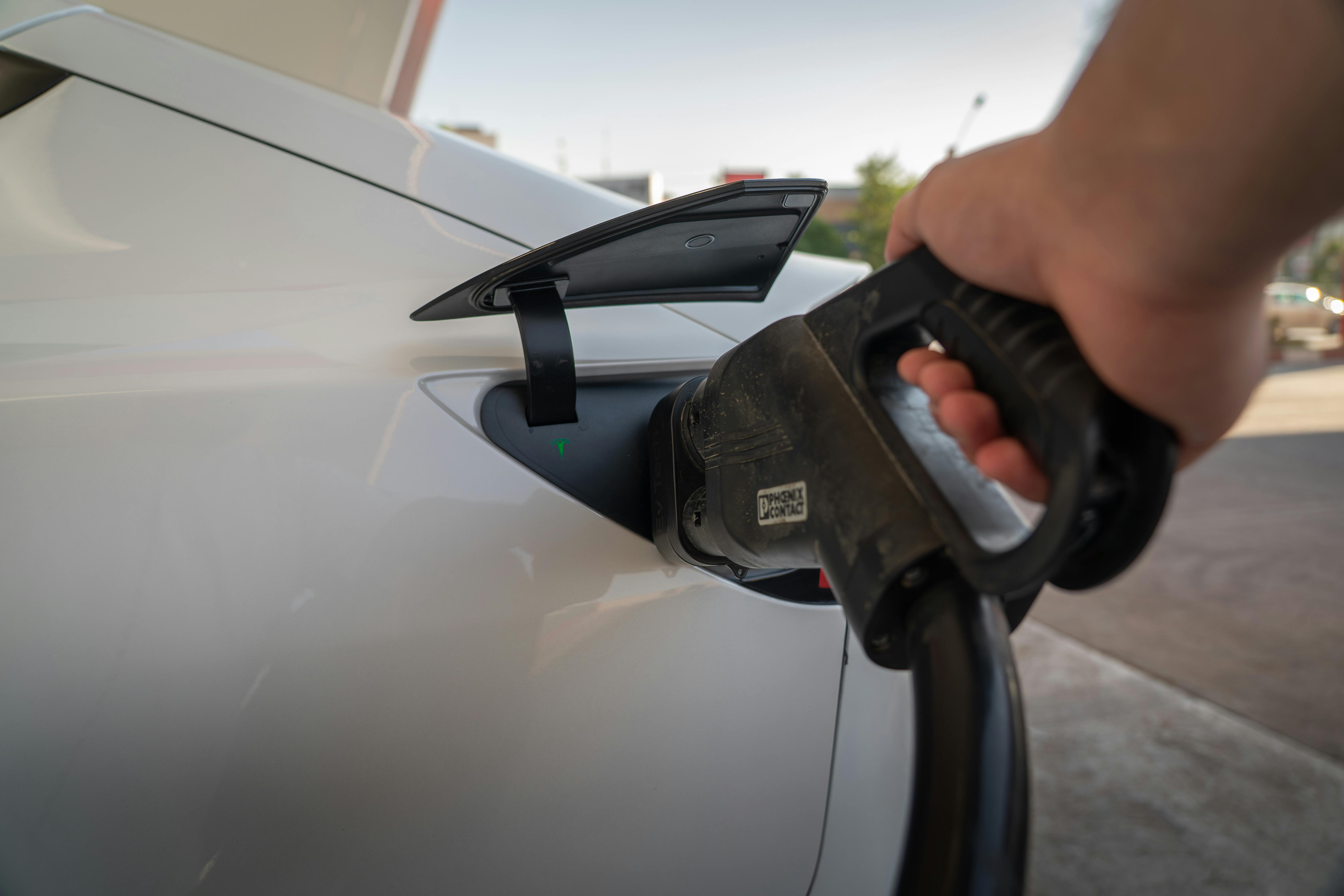
Revolutionize your EV ownership! Discover how Vehicle-to-Grid (V2G) technology and smart home energy management systems are turning electric vehicles into profit centers and powerful home batteries in 2026. Learn how to earn money, save on utility bills, and gain energy independence with the best V2G chargers and integrated solutions on the market.
Introduction to the Topic
It's 2026, and your electric vehicle is no longer just a mode of transport; it's a dynamic asset, a mobile power bank, and a key player in your home's energy ecosystem. The buzzword? Vehicle-to-Grid (V2G) technology. For years, EVs have been celebrated for their zero-emission driving and lower running costs. But now, with V2G reaching mainstream adoption, your EV is poised to become an active participant in the energy grid, capable of both drawing power and feeding it back. This isn't just about sustainability; it's about smart financial management, energy independence, and maximizing the return on your EV investment.
Imagine your EV battery not just powering your daily commute but also offsetting your peak electricity costs, earning you credits from your utility, or even keeping your lights on during a blackout. This future is here, driven by advancements in bi-directional charging, sophisticated home energy management systems, and a growing need for grid flexibility. Techeology.com delves deep into how you can transform your EV from a simple charger to a revenue-generating power hub, navigating the best options for V2G integration into your smart home.
Backgrounds & Facts
Vehicle-to-Grid (V2G) technology enables bi-directional power flow, meaning your EV can not only charge its battery from the grid but also discharge stored energy back into your home or the grid itself. This concept, once a niche topic for energy researchers, has exploded in relevance as EV adoption rates soar and renewable energy sources like solar and wind become more prevalent. By 2026, global EV sales have pushed past 40% of new vehicle purchases in many developed nations, creating an unprecedented mobile energy storage capacity.
The imperative for V2G stems from several critical factors:
- Grid Stability: Renewable energy, while clean, can be intermittent. V2G allows EVs to act as distributed energy resources, absorbing excess solar/wind power when generation is high and discharging it during peak demand or when renewables are scarce, thus balancing the grid.
- Energy Independence: For homeowners, V2G combined with solar panels and a home energy management system (HEMS) offers a powerful path to energy self-sufficiency, reducing reliance on the traditional grid and protecting against outages.
- Economic Incentives: Utilities are increasingly offering demand response programs and time-of-use (TOU) tariffs. V2G allows EV owners to 'peak shave' – charging when electricity is cheap (off-peak) and discharging when it's expensive (on-peak), or even selling power back for a profit.
- Technological Maturity: The development of the ISO 15118-20 standard for bi-directional communication, alongside robust V2G-compatible EVs and charging hardware, has made this technology reliable and scalable. Many new EV models, especially from brands like Ford, Hyundai, Kia, and Rivian, now come V2G-ready, often leveraging the NACS (North American Charging Standard) or CCS protocols for bi-directional flow.
The market for V2G hardware and services is projected to reach billions by the end of the decade, making it one of the most exciting investment opportunities for savvy EV owners.
Expert Opinion / Analysis
"The transition from 'dumb charging' to 'smart energy management' is the single biggest shift in EV ownership this decade," states Dr. Anya Sharma, lead analyst at 'Future Energy Insights'. "V2G isn't just a gimmick; it's a fundamental change in how we perceive and utilize energy. Your EV battery is, pound-for-pound, one of the most valuable energy storage assets you own. Not leveraging it for grid services or home backup is leaving money on the table."
Dr. Sharma emphasizes the economic advantages, estimating that an average EV owner participating in a V2G program could save or earn upwards of $500-$1500 annually, depending on local electricity rates, utility incentives, and vehicle usage patterns. "The sweet spot for V2G adoption is undoubtedly homeowners with solar installations and time-of-use electricity tariffs. Here, the synergy is undeniable: charge your EV with free solar power, use it to power your home overnight, and sell excess capacity back to the grid during peak hours. It's a triple win for your wallet, the environment, and grid stability."
However, concerns about battery degradation remain a common question. "Modern Battery Management Systems (BMS) are incredibly sophisticated," Dr. Sharma clarifies. "V2G programs are designed to operate within optimal battery health parameters, often only utilizing a small percentage of the battery's total capacity for grid services, typically between 20-80% state of charge. Studies show that smart V2G cycling, when properly managed, has a negligible impact on battery longevity compared to regular driving and charging. In some cases, it can even improve battery health by keeping it in an optimal operating window." The key, she notes, is choosing a V2G solution with intelligent software that prioritizes your vehicle's health and your driving needs.
💰 Best Options in Comparison (VERY IMPORTANT)
Navigating the V2G landscape means choosing the right hardware and understanding how it integrates with your home and utility. Here are the leading options for 2026:
-
1. Integrated Smart Home Ecosystem: Enphase IQ EV Charger with Enphase Energy System
For those already invested in or considering a comprehensive home energy solution, Enphase offers a seamless V2G experience. Their IQ EV Charger (now V2G-enabled via software updates) integrates directly with the Enphase IQ System, which includes solar microinverters, battery storage (IQ Batteries), and intelligent energy management software. This creates a unified ecosystem where your EV, solar panels, and home battery work in concert, optimizing energy flow, maximizing self-consumption, and participating in grid services without manual intervention.
- Pros: Unparalleled integration, comprehensive energy optimization, robust software, excellent for solar homeowners, single-app control.
- Cons: Higher upfront cost if you're building the entire ecosystem from scratch, primarily optimized for Enphase components.
- Best For: Homeowners seeking a complete, future-proof energy management solution with solar and home battery integration.
-
2. Dedicated Universal V2G Charger: Wallbox Quasar 2
Building on the success of its predecessor, the Wallbox Quasar 2 is a standalone bi-directional DC charger designed for broad compatibility. It supports both CCS and NACS standards for V2G, making it versatile for a wide range of EV models. The Quasar 2 focuses purely on the bi-directional charging function, allowing users to power their home (V2H) or send energy back to the grid (V2G). Its intuitive app allows for scheduling and monitoring of energy flow, giving users direct control over their energy assets.
- Pros: Wide EV compatibility (CCS & NACS), robust hardware, user-friendly interface, competitive pricing for a dedicated V2G unit.
- Cons: Requires separate home energy management system for full optimization with solar/other home batteries, DC charging means it's generally more expensive than AC chargers.
- Best For: EV owners primarily interested in V2G/V2H functionality with broad vehicle compatibility, willing to manage other energy aspects separately.
-
3. Utility-Integrated V2G Program: GridCo 'PowerShare' Program (Example)
Many local utilities are launching their own V2G programs, often partnering with specific charger manufacturers or software providers. For instance, 'GridCo's PowerShare' program might offer subsidized V2G charger installations (e.g., specific models from ChargePoint or Siemens) in exchange for allowing the utility to manage your EV's charging and discharging during specific grid events. These programs are often designed to leverage your EV for demand response or ancillary services, providing direct financial incentives or bill credits.
- Pros: Often includes subsidized hardware and installation, direct financial incentives from your utility, minimal setup effort.
- Cons: Less control over energy flow, tied to specific utility terms and conditions, availability varies by region, may limit charger choice.
- Best For: EV owners looking for the simplest, most cost-effective entry into V2G, prioritizing direct financial incentives over granular control.
V2G Charger & Home Energy System Comparison (2026 Estimates)
| Feature | Enphase IQ EV Charger (w/ IQ System) | Wallbox Quasar 2 | Utility-Integrated Program (e.g., GridCo) |
|---|---|---|---|
| V2G Standard Support | NACS (via AC) | CCS, NACS (DC) | Varies (often NACS or CCS, AC or DC) |
| Max Power Output (V2G) | 11.5 kW (AC) | Up to 11.5 kW (DC) | Varies, typically 7-11.5 kW |
| Home Energy Integration | Seamless with Enphase HEMS, Solar, Battery | Standalone, integrates with some HEMS via API | Managed by Utility, potentially limited HEMS integration |
| Estimated Price Range (Hardware Only) | $1,500 - $2,500 (charger) + HEMS costs | $4,000 - $6,000 (DC charger) | Often subsidized or free with program enrollment |
| Key Benefit | Holistic energy self-sufficiency & optimization | Universal EV compatibility, robust V2H/V2G | Lowest upfront cost, direct utility incentives |
| Target User | Solar homeowners, energy independence seekers | Tech-savvy EV owners, diverse EV fleet | Cost-conscious, hands-off participants |
| Installation Complexity | Moderate (integrated system) | High (DC requires professional electrician) | Low (often managed by utility/partner) |
Outlook & Trends
The V2G revolution is only just beginning. By the end of the decade, we expect several key trends to accelerate its adoption and capabilities:
- Universal Standardization: While NACS is gaining traction, the ISO 15118-20 standard for bi-directional power flow will become the bedrock for all new V2G-enabled EVs and chargers, ensuring seamless interoperability across brands and regions.
- AI-Driven Energy Management: Future V2G systems will integrate even more sophisticated AI. These algorithms will predict energy needs based on your driving patterns, weather forecasts, electricity prices, and grid demand, optimizing charging and discharging decisions autonomously for maximum financial return and minimal battery impact.
- V2X Expansion: Vehicle-to-Everything (V2X) will become more commonplace. This includes Vehicle-to-Home (V2H) for powering your residence, Vehicle-to-Load (V2L) for powering tools and appliances directly from your car, and even Vehicle-to-Building (V2B) for commercial applications.
- Microgrids and Community Energy: EVs will play a crucial role in localized microgrids, allowing communities to generate, store, and share their own renewable energy, enhancing resilience and reducing reliance on centralized grids.
- Policy & Regulatory Support: Governments and regulatory bodies will introduce more comprehensive frameworks and incentives to encourage V2G participation, recognizing its vital role in grid modernization and decarbonization efforts.
The integration of V2G into our energy infrastructure marks a pivotal step towards a more resilient, sustainable, and economically beneficial energy future.
Conclusion
The year 2026 stands as a landmark for Vehicle-to-Grid technology, transforming your EV from a simple vehicle into a dynamic energy asset. The opportunity to earn money, significantly reduce your electricity bills, and bolster your home's energy resilience is no longer a distant dream but a tangible reality. Whether you opt for a fully integrated smart home ecosystem, a dedicated universal V2G charger, or a utility-backed program, the benefits are clear and compelling.
Investing in V2G technology is more than just an upgrade for your EV; it's an investment in your financial future, your energy independence, and a more sustainable planet. As an EV owner, you are uniquely positioned to be at the forefront of this energy revolution. Now is the time to research the options, check local incentives, and talk to certified installers. Unlock the full potential of your electric vehicle – it's ready to power your life, and even pay you back.