
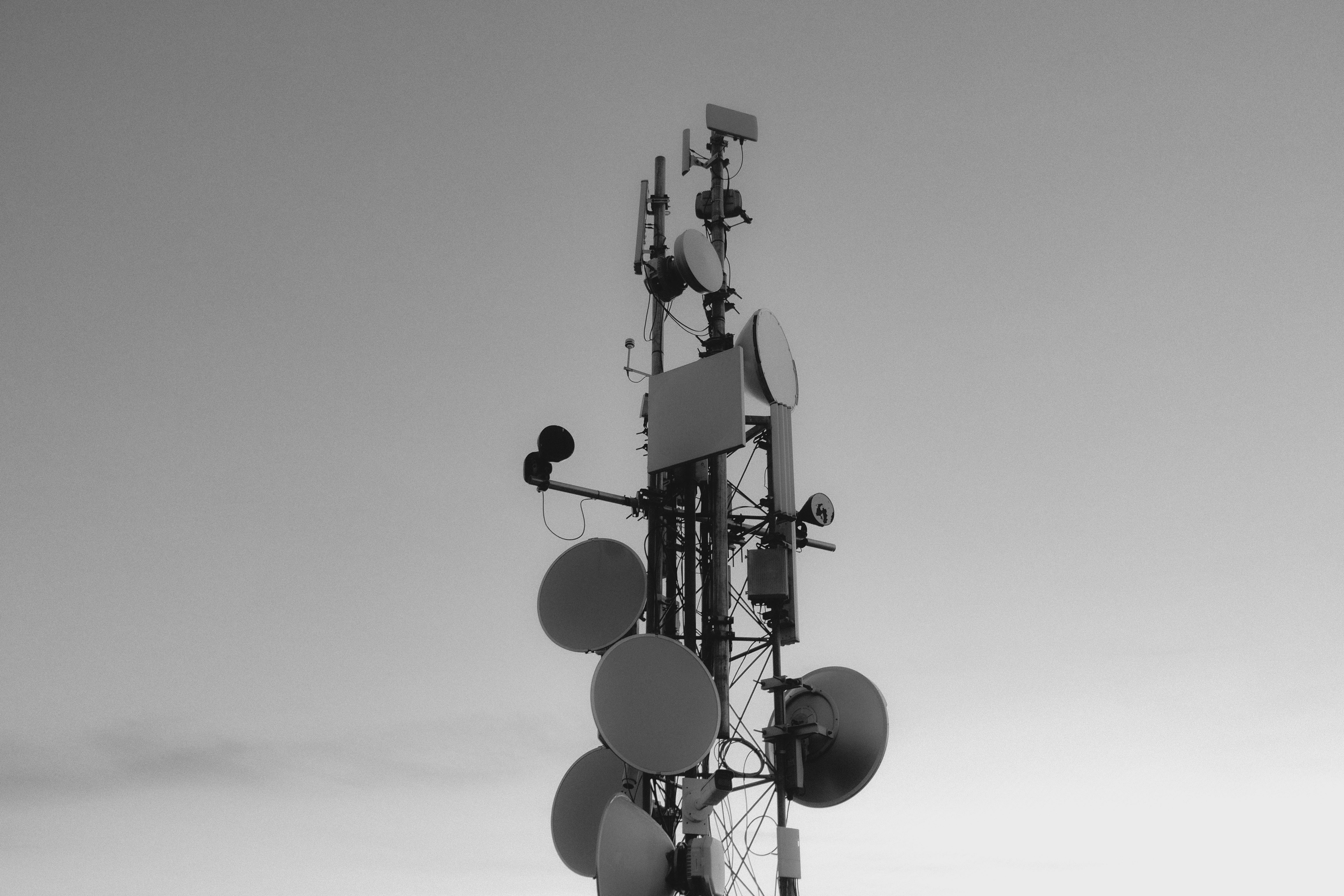
In 2026, private 5G networks are no longer a futuristic concept but a critical competitive advantage for enterprises. Discover how dedicated 5G solutions deliver unmatched security, ultra-low latency, and robust connectivity for Industry 4.0, IoT, and AI applications, driving digital transformation and maximizing ROI. This definitive guide compares leading private 5G vendors and deployment strategies to help your business choose the best solution for unparalleled efficiency and growth.
Introduction to the Topic
Welcome to 2026, where the promise of 5G has matured into a tangible, transformative force for businesses worldwide. While public 5G networks have brought faster speeds to our smartphones, a quiet revolution has been brewing behind the scenes: the rise of private 5G networks. For enterprises grappling with the insatiable demands of Industry 4.0, the explosion of IoT devices, and the imperative for real-time data processing at the edge, traditional Wi-Fi and even public 5G often fall short. Private 5G is emerging as the undisputed champion, offering unparalleled control, security, and performance for mission-critical operations. This isn't just about faster internet; it's about building a dedicated, future-proof digital backbone that drives unprecedented efficiency, innovation, and ultimately, billions in new revenue and cost savings. If your business isn't considering private 5G, you're not just falling behind – you're risking obsolescence.
Backgrounds & Facts
What exactly is a private 5G network, and why is it so indispensable in 2026? At its core, a private 5G network is a localized, dedicated wireless network built exclusively for an enterprise. Unlike public networks, which share resources across millions of users, private 5G operates on its own spectrum (licensed, shared, or unlicensed) and infrastructure, providing a closed, secure, and highly customizable environment. This distinction is crucial for industries like manufacturing, logistics, mining, healthcare, and smart ports, where data security, ultra-low latency, and massive device connectivity are non-negotiable.
Consider the limitations of previous connectivity solutions: Wi-Fi, while ubiquitous, struggles with interference in crowded industrial environments, lacks deterministic latency, and offers limited range and device density. Public 5G, while fast, cannot guarantee specific service level agreements (SLAs) for sensitive applications, and routing critical data through public internet infrastructure raises significant security and privacy concerns. Private 5G addresses these challenges head-on, offering:
- Unmatched Security: Data remains within the enterprise's control, often on-premises, minimizing exposure to external threats.
- Ultra-Low Latency: Essential for real-time control of robotics, autonomous guided vehicles (AGVs), and augmented reality (AR) applications.
- Massive Connectivity: Supports millions of IoT sensors and devices per square kilometer, far exceeding Wi-Fi's capabilities.
- High Bandwidth: Critical for transmitting large volumes of data from high-definition cameras, sensors, and AR/VR devices.
- Enhanced Reliability: Designed for mission-critical operations with redundant systems and predictable performance.
- Customization & Control: Enterprises dictate network policies, prioritize traffic, and integrate seamlessly with their existing IT/OT infrastructure.
By 2026, the global private 5G market is projected to reach tens of billions of dollars, with significant adoption across diverse verticals. Research indicates that early adopters are already seeing significant ROI, from reducing operational costs by 15-20% through automation to unlocking entirely new revenue streams through innovative connected services. This isn't a niche technology; it's a foundational pillar for any business serious about digital transformation and maintaining a competitive edge.
Expert Opinion / Analysis
“The strategic imperative for private 5G in 2026 cannot be overstated,” asserts Dr. Anya Sharma, lead analyst for enterprise connectivity at TechInsights Global. “Businesses that delay their private 5G deployment are essentially ceding ground to more agile competitors. The real value isn't just in the connectivity itself, but in how it enables advanced applications like AI-driven predictive maintenance, real-time supply chain optimization, and immersive training simulations that were simply impossible before.”
However, Dr. Sharma cautions against a 'one-size-fits-all' approach. “The biggest pitfall we see is enterprises rushing into a solution without a clear understanding of their specific use cases and long-term strategic goals. Spectrum acquisition or leasing, integration with legacy systems, and the choice between a fully managed service or a DIY approach are complex decisions with significant CAPEX and OPEX implications.”
Key strategic considerations for businesses embarking on their private 5G journey include:
- Use Case Definition: Clearly identify the applications that will leverage the private network. Is it for AGVs, AR/VR, remote control, sensor data, or a combination? This dictates network design.
- Spectrum Strategy: Understand the options – licensed spectrum (often via telecom operators), shared spectrum (like CBRS in the US), or unlicensed (e.g., in Europe). Each has cost, availability, and regulatory implications.
- Integration Complexity: Private 5G must integrate seamlessly with existing IT infrastructure, cloud platforms, and operational technology (OT) systems. This requires careful planning and often, specialized expertise.
- Build vs. Buy vs. Partner: Enterprises must decide their level of involvement. Do they have the internal expertise to design, deploy, and manage the network, or is a fully managed service from a telco or cloud provider a better fit?
- Security and Compliance: While private 5G offers inherent security advantages, robust cybersecurity protocols, data encryption, and compliance with industry regulations remain paramount.
- ROI Beyond Cost Savings: Calculate the return on investment not just through reduced operational costs, but also through new revenue streams, improved safety, enhanced worker productivity, and competitive differentiation.
“Ultimately,” concludes Dr. Sharma, “private 5G is a strategic investment in digital sovereignty. It empowers businesses to innovate at their own pace, with the security and reliability they demand, paving the way for the next generation of industrial automation and intelligent operations.”
💰 Best Options in Comparison (VERY IMPORTANT)
Choosing the right private 5G solution requires careful evaluation of your business needs, existing IT capabilities, budget, and desired level of control. In 2026, the market offers a diverse range of approaches, from fully managed, cloud-integrated services to highly customizable, self-managed deployments. Understanding these options is crucial for maximizing your ROI and ensuring a future-proof investment.
Deployment Models & Leading Providers:
-
Cloud-Managed Private 5G (e.g., AWS Private 5G, Azure Private MEC):
These solutions leverage the power and scalability of hyperscale cloud providers. They offer a highly integrated experience, combining private 5G infrastructure with existing cloud services, edge computing, and AI/ML capabilities. Setup is often streamlined, with a pay-as-you-go or subscription model reducing upfront CAPEX. Ideal for cloud-native enterprises or those heavily invested in a specific cloud ecosystem, seeking rapid deployment and seamless integration with their digital transformation initiatives.
-
Enterprise DIY / Vendor-Supplied (e.g., Nokia Digital Automation Cloud, Ericsson Private Networks, Samsung):
For enterprises with strong internal IT/OT teams and a desire for maximum control and customization, direct engagement with network equipment providers is a viable path. Vendors like Nokia and Ericsson offer comprehensive private 5G portfolios, including core network software, radios, and management platforms. This model requires significant internal expertise for deployment, integration, and ongoing management, but offers the highest degree of flexibility and potential for long-term cost efficiency if managed effectively.
-
Telco-Managed Private 5G (e.g., Verizon Business, AT&T, Vodafone Enterprise, Deutsche Telekom):
Many traditional telecom operators have expanded their enterprise offerings to include fully managed private 5G services. Leveraging their extensive network expertise, spectrum assets, and operational capabilities, telcos provide end-to-end solutions, from design and deployment to ongoing maintenance and support. This is an attractive option for businesses seeking a turn-key solution, strong Service Level Agreements (SLAs), and compliance guarantees, often bundling connectivity with other value-added services.
-
Specialized System Integrators:
A growing number of system integrators specialize in private 5G, offering bespoke solutions that combine hardware and software from various vendors. These integrators can provide highly tailored deployments, often focusing on specific vertical industries or complex integration challenges. They act as expert partners, guiding enterprises through the entire process and bridging the gap between vendor offerings and specific business needs.
To help you navigate these choices, here’s a comparative table:
| Feature / Solution Type | Cloud-Managed Private 5G | Enterprise DIY / Vendor-Supplied | Telco-Managed Private 5G |
|---|---|---|---|
| Key Providers (Examples) | AWS Private 5G, Azure Private MEC | Nokia DAC, Ericsson Private Networks, Samsung | Verizon Business, Vodafone Enterprise, AT&T |
| Ideal For | Cloud-native enterprises, manufacturing, logistics, healthcare; rapid deployment, strong edge integration. | Large enterprises with strong IT/OT teams, specific customization needs, high control requirements. | Businesses seeking turn-key solutions, compliance, strong SLAs, leveraging existing telco relationships. |
| Pros | Fast deployment, pay-as-you-go, seamless cloud integration, strong ecosystem for edge apps, reduced CAPEX. | Maximum control and customization, potential for lowest long-term OPEX (if managed internally), minimal vendor lock-in. | End-to-end service, strong SLAs, regulatory expertise, reduced operational burden, established support, predictable OPEX. |
| Cons | Potential vendor lock-in to cloud ecosystem, ongoing OPEX, less granular hardware control. | High initial CAPEX, significant internal expertise required, longer deployment cycles, ongoing operational overhead. | Less customization flexibility, potential for higher recurring OPEX, reliance on telco's roadmap, less control over core infrastructure. |
| Control Level | Moderate to High (via cloud console) | Very High | Low to Moderate |
| Deployment Effort | Low (managed by cloud provider) | Very High (internal team) | Low (managed by telco) |
| TCO Impact (Conceptual) | Predictable OPEX, lower initial CAPEX, scale with usage. | High CAPEX, potentially lower OPEX (if internal resources are efficient), long-term asset ownership. | Predictable OPEX, often bundled services, minimal CAPEX, focus on operational expenditure. |
When making your decision, consider not just the upfront costs but the Total Cost of Ownership (TCO), including staffing, maintenance, and potential for future upgrades. Engage with multiple vendors and integrators, conduct thorough proof-of-concepts, and prioritize solutions that align with your long-term digital strategy.
Outlook & Trends
The private 5G landscape is dynamic, with exciting developments on the horizon. As we move further into 2026 and beyond, several key trends will shape its evolution:
- 5G Advanced and 6G Preparations: The next iterations of 5G (5G-Advanced) will bring even greater capabilities, including enhanced AI integration, more precise positioning, and further reductions in latency, benefiting private networks immensely. Early research into 6G is already hinting at truly immersive extended reality (XR) and ubiquitous AI, which private networks will be crucial for enabling at the enterprise edge.
- Deeper AI/ML Integration at the Edge: Expect private 5G networks to become even more intertwined with AI and Machine Learning. Real-time data from sensors and cameras will be processed at the network edge, feeding AI models for instant insights, predictive maintenance, quality control, and autonomous decision-making without needing to send data to the cloud.
- Open RAN Adoption: The Open Radio Access Network (Open RAN) architecture is gaining traction, promising greater vendor diversity, reduced vendor lock-in, and more flexible, cost-effective deployments for private networks. This will empower enterprises with more choice and customization options.
- Vertical-Specific Solutions: We will see increasingly tailored private 5G solutions for specific industries. Whether it's ultra-ruggedized equipment for mining, highly secure solutions for healthcare, or precise synchronization for smart grids, the market will mature with offerings perfectly aligned to unique vertical demands.
- Convergence with Other Technologies: Private 5G will not exist in a vacuum. Expect seamless integration with Wi-Fi 7 for office environments, satellite connectivity for remote sites, and even emerging non-terrestrial networks (NTN) to create truly resilient and ubiquitous hybrid connectivity solutions.
- Sustainability Focus: As energy consumption becomes a critical business concern, future private 5G deployments will prioritize energy-efficient hardware and intelligent network management to minimize environmental impact.
These trends underscore private 5G's position not just as a current necessity, but as a foundational technology that will continue to evolve and drive innovation for decades to come.
Conclusion
In 2026, private 5G networks are no longer an option but a strategic imperative for any enterprise serious about digital transformation, competitive advantage, and maximizing ROI. From securing mission-critical data to enabling the next generation of industrial automation and AI at the edge, the benefits are clear and profound. The choice of deployment model and vendor is a critical one, demanding careful consideration of your specific use cases, internal capabilities, and long-term strategic vision. Don't delay. Evaluate your needs, consult with expert providers, and invest in a private 5G network to secure your competitive edge and drive unprecedented growth in this rapidly evolving digital economy.