
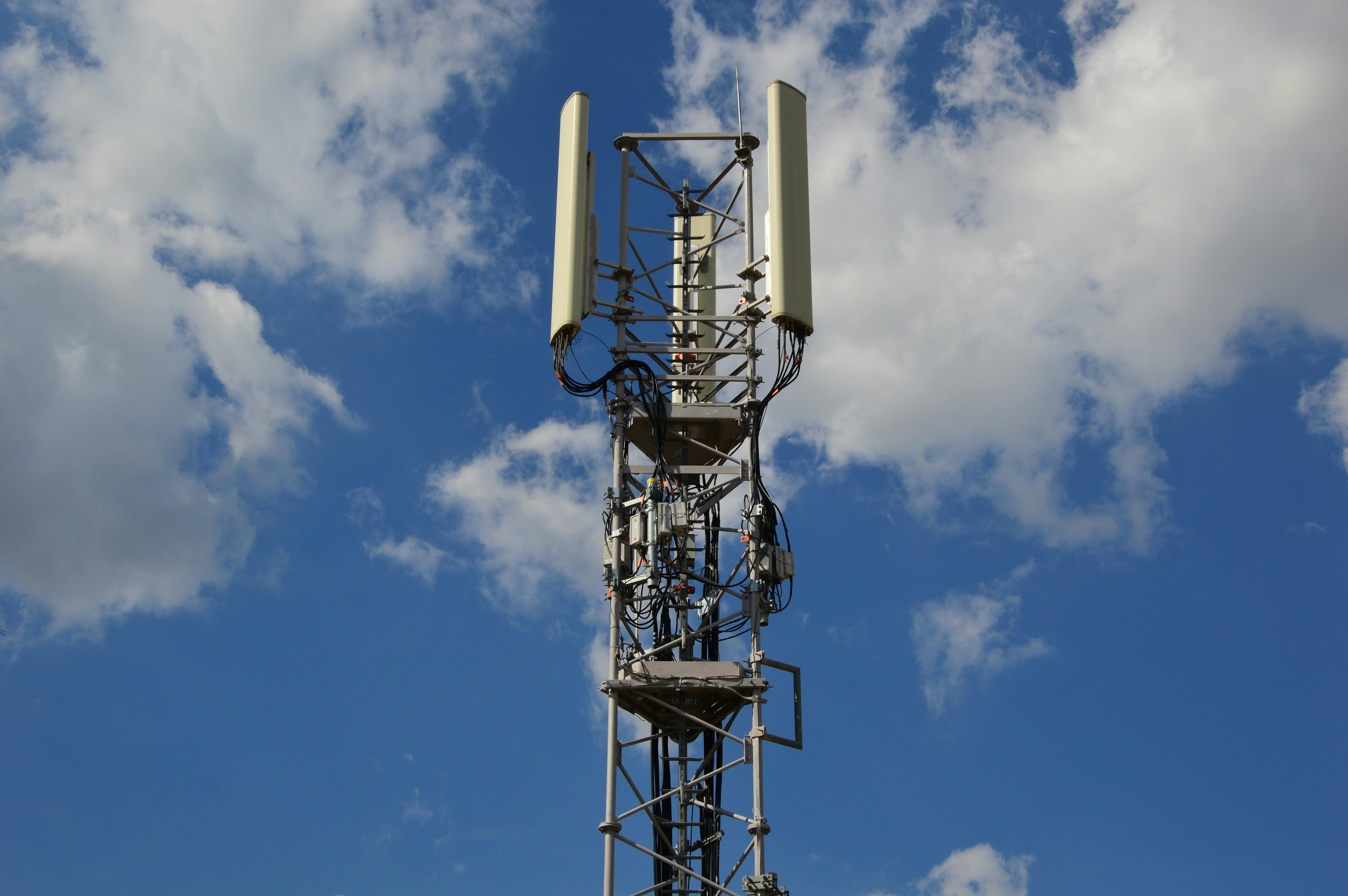
In 2026, private 5G networks are no longer a luxury but a strategic imperative for enterprises seeking unparalleled control, security, and performance. Discover how dedicated 5G connectivity empowers industrial IoT, smart factories, and digital transformation. This comprehensive guide compares leading private 5G solutions, deployment models, and key vendors to help you maximize your investment and secure your competitive edge.
Introduction to the Topic
The year is 2026, and the digital transformation landscape has evolved dramatically. While public 5G networks have delivered unprecedented mobile speeds and connectivity, a new frontier has emerged as the definitive solution for enterprise-grade applications: Private 5G Networks. Businesses across every sector, from manufacturing and logistics to healthcare and smart agriculture, are recognizing that relying solely on public infrastructure or traditional Wi-Fi is no longer sufficient to meet the demanding requirements of Industry 4.0. The need for ultra-reliable, low-latency, and highly secure connectivity, customized specifically for an organization's unique operational footprint, has propelled Private 5G from a niche concept to a mainstream strategic investment. This guide will cut through the hype, providing you with a critical understanding of why Private 5G is essential, what options are available, and how to choose the right path to unlock significant return on investment (ROI) for your enterprise.
Backgrounds & Facts
A Private 5G network is essentially a dedicated, localized 5G cellular network built for the exclusive use of an organization. Unlike public 5G, which shares spectrum and infrastructure across millions of users, Private 5G offers unparalleled control, security, and performance. Operating on licensed, unlicensed, or shared spectrum, these networks are typically deployed on-premise, providing a robust, isolated ecosystem for critical business operations. Key benefits driving their rapid adoption include:
- Ultra-Low Latency: Critical for real-time applications like autonomous vehicles, robotics, and remote-controlled machinery, enabling sub-10ms response times.
- High Bandwidth & Capacity: Supports massive numbers of connected devices (mMTC) and high-volume data transfer, perfect for Industrial IoT (IIoT) sensors, high-definition video surveillance, and AR/VR applications.
- Enhanced Security: Data remains within the enterprise's control, offering superior privacy and protection compared to public networks or Wi-Fi, crucial for sensitive operational data.
- Customization & Control: Enterprises can tailor network parameters, Quality of Service (QoS), and coverage to exact operational needs, ensuring specific applications receive priority.
- Reliability & Resilience: Independent of public network congestion or outages, providing consistent, robust connectivity for mission-critical processes.
Market forecasts for Private 5G deployments show exponential growth, with analysts predicting a multi-billion dollar market by the end of the decade. This surge is fueled by the maturation of 5G technology, increasing accessibility of spectrum, and a growing understanding among enterprises of the competitive advantage offered by dedicated wireless infrastructure. From smart factories optimizing production lines with AI-powered vision systems to hospitals deploying real-time patient monitoring and data analytics, Private 5G is the backbone for the next wave of digital innovation.
Expert Opinion / Analysis
“By 2026, the question for many forward-thinking enterprises isn't 'if' they will deploy Private 5G, but 'when' and 'how,'” states Dr. Lena Sharma, Chief Connectivity Strategist at GlobalTech Insights. “The early adopters have already demonstrated tangible ROI, from significant operational cost reductions to new revenue streams enabled by previously impossible applications. The true power of Private 5G lies in its convergence with edge computing. By processing data at the network edge, closer to the source, businesses can achieve near-instantaneous insights and actions, transforming everything from predictive maintenance in manufacturing to real-time inventory management in logistics.”
Dr. Sharma further elaborates on the evolving landscape: “While initial deployment costs can be a consideration, the long-term benefits in terms of efficiency, security, and innovation far outweigh the investment. We’re also seeing a diversification of deployment models, from fully on-premise solutions to hybrid cloud-managed networks, making Private 5G more accessible to a wider range of businesses. Spectrum availability, particularly in shared and unlicensed bands, is democratizing access, allowing even mid-sized companies to build their own bespoke networks. The challenge now is not just in technology, but in strategic planning – identifying the specific use cases that will deliver the most immediate and impactful value.”
Security, a perennial concern for enterprises, finds a formidable ally in Private 5G. With data traffic remaining within the enterprise's firewall and dedicated resources, the attack surface is significantly reduced compared to public networks. This isolation, combined with 5G's inherent security features like mutual authentication and strong encryption, offers a robust defense against cyber threats, a critical factor for protecting sensitive industrial and operational data.
💰 Best Options in Comparison (VERY IMPORTANT)
Choosing the right Private 5G solution requires a thorough understanding of your enterprise's specific needs, existing infrastructure, budget, and desired level of control. The market in 2026 offers a diverse range of providers and deployment models. Here, we compare the leading categories to help you navigate your purchasing decision.
- 1. Telco-as-a-Service (Managed Private 5G): Major mobile network operators (MNOs) like Verizon Business, AT&T Business, Vodafone Business, and Deutsche Telekom offer fully managed Private 5G solutions. They handle everything from spectrum acquisition (if needed) and network design to deployment, operations, and ongoing maintenance.
- 2. Infrastructure Vendors: Companies like Ericsson, Nokia, Samsung, HPE, and Cisco provide the core network components (RAN, core, orchestration software) for enterprises to build and operate their own networks, often with the help of system integrators.
- 3. Cloud Provider Solutions: Hyperscalers such as AWS Private 5G and Azure Private MEC offer a streamlined approach, leveraging their cloud infrastructure for core network functions and management, often integrating with existing cloud services and edge computing.
- 4. System Integrators & Specialists: Firms like Capgemini, Accenture, and specialized local integrators offer end-to-end consulting, design, deployment, and managed services, often acting as a neutral party to integrate components from various vendors.
Private 5G Solutions Comparison Table (2026)
| Provider Type | Key Offerings | Deployment Model | Target User/Industry | Pros | Cons | Estimated Cost Range (Relative) |
|---|---|---|---|---|---|---|
| Telco-as-a-Service | Fully managed network, spectrum, hardware, operations. | Hybrid (on-premise RAN, cloud/telco core), OpEx focused. | Enterprises wanting minimal operational overhead, fast deployment. | Turnkey solution, reduced complexity, strong SLAs, established support. | Less customization, potential vendor lock-in, recurring OpEx. | Medium to High OpEx |
| Infrastructure Vendors | Hardware (RAN, Core), software platforms, professional services. | On-premise, enterprise-owned & operated, CapEx focused. | Large enterprises with IT expertise, specific customization needs. | Maximum control & customization, long-term cost efficiency, no vendor lock-in (if multi-vendor). | High upfront CapEx, requires in-house expertise, higher operational burden. | High CapEx, Low to Medium OpEx |
| Cloud Provider Solutions | Cloud-managed core, integrated edge computing, simplified deployment. | Hybrid (on-premise RAN, cloud-hosted core/management), OpEx focused. | Cloud-native enterprises, those leveraging existing cloud infrastructure. | Scalability, ease of integration with cloud services, simplified management. | Reliance on cloud provider, potential data egress costs, less control over physical infrastructure. | Medium OpEx |
| System Integrators & Specialists | Consulting, design, multi-vendor integration, deployment, managed services. | Flexible (on-premise, hybrid), mix of CapEx/OpEx. | Any enterprise needing tailored solutions, lacking in-house expertise. | Vendor-agnostic, customized solutions, expert guidance, flexible support models. | Can be more costly if services are extensive, reliance on integrator's expertise. | Varies (Project-based + OpEx) |
When making your decision, consider your specific use cases, your existing IT and operational technology (OT) expertise, your budget allocation (CapEx vs. OpEx), and your long-term strategic goals. Engaging with multiple providers and requesting detailed proposals tailored to your unique requirements is highly recommended. Don't hesitate to ask for case studies and references from companies in similar industries.
Outlook & Trends
The trajectory of Private 5G is one of continuous innovation and expansion. Looking ahead, we anticipate several key trends shaping its evolution:
- AI & Machine Learning Integration: AI will become ubiquitous in Private 5G networks for predictive maintenance, traffic optimization, security anomaly detection, and automated network management, reducing operational costs and enhancing performance.
- Further Spectrum Liberalization: More countries will open up shared and unlicensed spectrum bands (e.g., CBRS-like models globally), further democratizing access and driving down deployment costs.
- Open RAN & Disaggregated Architectures: The adoption of Open RAN principles will accelerate, allowing enterprises greater flexibility in mixing and matching hardware and software components from different vendors, fostering innovation and reducing vendor lock-in.
- Seamless 5G-6G Transition: As 6G research and development intensify, Private 5G networks will serve as crucial testbeds and early deployment environments, ensuring a smoother transition to the next generation of connectivity.
- New Use Cases & Verticals: Beyond manufacturing, Private 5G will see significant uptake in healthcare (remote surgery, real-time diagnostics), mining, energy, defense, and smart city infrastructure, enabling truly transformative applications.
- Convergence with Satellite Connectivity: For geographically dispersed operations or remote sites, hybrid Private 5G solutions integrating low-earth orbit (LEO) satellite communication will provide ubiquitous, reliable connectivity.
These trends underscore the dynamic nature of Private 5G, promising even greater capabilities and accessibility for enterprises committed to leveraging cutting-edge connectivity for competitive advantage.
Conclusion
In 2026, Private 5G networks stand as the undeniable foundation for advanced enterprise digital transformation. They offer a unique blend of performance, security, and control that public networks simply cannot match for mission-critical applications. By carefully evaluating the diverse array of solutions – from fully managed services by telcos to custom builds with infrastructure vendors or cloud-integrated platforms – enterprises can strategically invest in a network that not only meets today's demands but is also future-proofed for the innovations of tomorrow. Don't get left behind. Evaluate your options today, request a consultation, or get a customized quote for your enterprise's private 5G journey to unlock massive ROI and secure your competitive edge in the digital economy.