
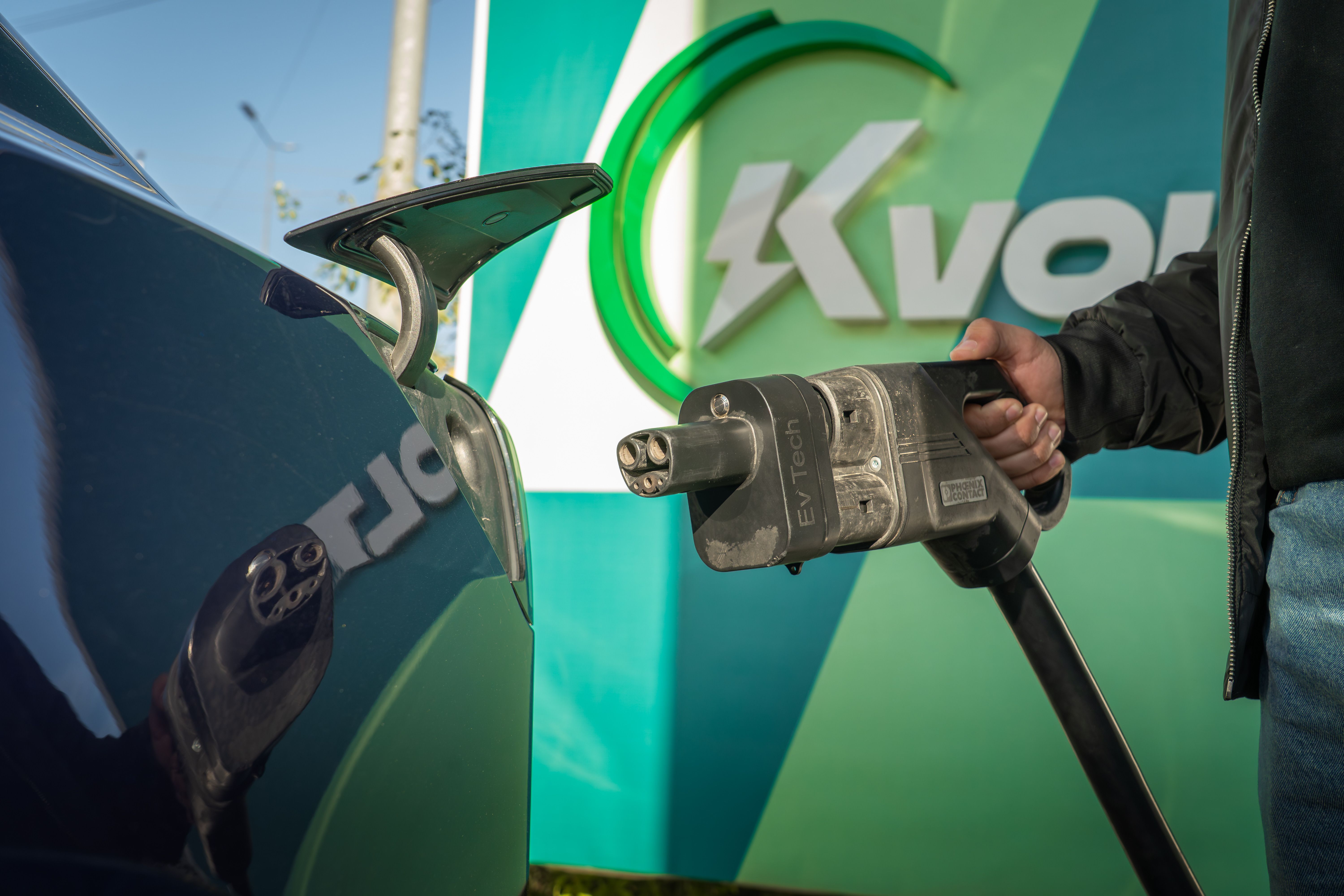
The EV revolution is accelerating, and in 2026, charging is no longer just about powering up. Discover how next-generation bidirectional (V2G/V2H) EV chargers are turning your electric vehicle into a mobile power bank, offering energy independence, significant cost savings, and even revenue generation. Plus, navigate the burgeoning landscape of ultra-fast charging networks that promise to slash your charging times. This comprehensive guide helps you compare the best EV charging solutions, understand installation costs, and choose future-proof technology for maximum RPM.
Introduction to the Topic
Welcome to 2026, a pivotal year in the electric vehicle (EV) revolution. With millions more EVs hitting the roads globally, the conversation has shifted dramatically from range anxiety to charging intelligence. No longer a mere utility, EV charging has evolved into a sophisticated ecosystem offering unprecedented convenience, efficiency, and financial benefits. This isn't just about plugging in; it's about powering your home, selling energy back to the grid, and reclaiming hours from your busy schedule. For savvy EV owners and prospective buyers, understanding the nuances of bidirectional charging (Vehicle-to-Grid, V2G, and Vehicle-to-Home, V2H) and the exponential growth of ultra-fast charging networks is paramount. These aren't just buzzwords; they represent tangible opportunities for energy independence, cost savings, and even generating income from your vehicle. If you're looking to maximize your EV investment, future-proof your energy setup, and optimize your charging experience, you've come to the right place. We'll dive deep into the technologies that are redefining what it means to own an EV in 2026.
Backgrounds & Facts
The past five years have seen an explosive growth in EV adoption, far surpassing initial industry predictions. As of early 2026, over 45 million EVs are on the road worldwide, with significant policy pushes and consumer demand driving this surge. However, this rapid expansion has also highlighted the critical need for a robust, intelligent, and flexible charging infrastructure. Traditional Level 2 home chargers, while convenient, often lack the speed and smart capabilities demanded by today's interconnected world. Public DC fast charging has improved, but bottlenecks and varying speeds remain a pain point for many. This is where the next generation steps in.
Bidirectional charging, once a niche concept, is now a mainstream reality. V2G technology allows your EV's battery to discharge electricity back into the grid, providing valuable grid services during peak demand or acting as a buffer for renewable energy sources. V2H, a subset of V2G, enables your EV to power your home during outages or offset expensive peak-hour electricity usage. This isn't just theoretical; major automakers like Ford, Hyundai, Volkswagen, and Nissan have integrated V2G/V2H capabilities into their latest EV models, making compatible vehicles a highly sought-after asset. The hardware, from smart bidirectional EV chargers to integrated home energy management systems, has matured significantly, becoming more affordable and user-friendly. Governments and utility companies worldwide are actively incentivizing V2G participation, recognizing its crucial role in grid stability and renewable energy integration.
Simultaneously, the race for ultra-fast charging speeds has intensified. What was once considered 'fast' (50-150kW) is now the baseline. In 2026, ultra-fast charging networks routinely offer 350kW to 500kW charging stations, capable of adding hundreds of miles of range in mere minutes. This leap is largely due to advancements in battery thermal management, higher voltage EV architectures (800V and even 1000V systems becoming more common), and more robust grid connections. The expansion of these networks is critical for inter-city travel and reducing range anxiety, turning long-distance EV trips into a seamless experience comparable to refueling a traditional vehicle. The convergence of these two technologies – the intelligent energy management of bidirectional charging and the sheer speed of ultra-fast networks – is fundamentally reshaping the EV ownership experience, offering unparalleled flexibility and control.
Expert Opinion / Analysis
“The EV isn't just a mode of transport anymore; it's a mobile energy asset,” states Dr. Anya Sharma, lead grid integration specialist at Electrify Tomorrow Labs. “In 2026, V2G and V2H are no longer experimental. We're seeing widespread adoption, driven by both consumer demand for energy resilience and utilities' need for grid flexibility. An EV with V2G capability can literally pay for itself over its lifetime through energy arbitrage, participation in demand response programs, and backup power during outages. The average homeowner could save hundreds, if not thousands, annually on electricity bills by intelligently managing their EV's battery.”
Dr. Sharma emphasizes the economic benefits: “Imagine charging your EV when solar energy is abundant or electricity prices are low, then discharging a portion of that energy to power your home during peak hours when rates are high. This 'energy arbitrage' is a game-changer. Furthermore, utilities are offering incentives for V2G participants to help balance the grid, especially as renewable energy sources like solar and wind become more prevalent. Your EV becomes a crucial component of a smarter, more sustainable energy ecosystem.”
Regarding ultra-fast charging, industry analyst Mark Jensen from AutoTech Insights notes, “The psychological barrier of charging time is rapidly diminishing. With 350-500kW chargers becoming the norm, a 10-minute coffee break can now net you 150-200 miles of range. This speed, coupled with improved reliability and wider availability, is crucial for accelerating mainstream EV adoption. We're seeing intense competition among charging network providers to offer the most reliable, fastest, and most seamlessly integrated user experience, often through advanced charging apps and subscription models that offer cost-per-kWh savings.”
However, Jensen also cautions on infrastructure readiness: “While the chargers are getting faster, ensuring the local grid can support multiple ultra-high-power connections simultaneously is the next big hurdle. This requires significant investment in grid upgrades, battery storage at charging hubs, and smart load management. Consumers should look for networks that demonstrate robust infrastructure and transparent pricing.”
💰 Best Options in Comparison (VERY IMPORTANT)
Navigating the 2026 EV charging landscape requires understanding your specific needs. Are you prioritizing home energy independence, maximizing income from your EV, or simply seeking the fastest charging on the go? Here are some of the leading options:
- Wallbox Quasar 2 Bidirectional Charger: A leader in home V2G/V2H solutions. This unit offers up to 11.5kW bidirectional power, enabling rapid home backup and seamless grid interaction. Its compact design and smart energy management features make it a top choice for homeowners looking to integrate their EV into a smart home ecosystem. Compatible with a growing list of CCS-enabled EVs.
- Enphase IQ Charger with V2G Integration: For homeowners already invested in solar or Enphase's energy ecosystem, their new IQ Charger offers unparalleled V2G capabilities, seamlessly integrating EV charging and discharging with solar production and home battery storage. It's a premium solution for ultimate energy independence and optimization.
- Ford Charge Station Pro (with F-150 Lightning/other compatible Ford EVs): Specifically designed for Ford's V2H-enabled vehicles, this 80-amp charger provides robust home backup power and is integral to Ford's Intelligent Backup Power system. While primarily for Ford owners, it showcases a powerful OEM-integrated V2H solution.
- Electrify America's Ultra-Fast Network: Still one of the largest and most reliable networks for public DC fast charging. In 2026, most new stations offer 350kW+ charging, with many exceeding 400kW. They offer flexible pricing, including pay-as-you-go and subscription plans (Electrify Pass+ for discounted rates).
- EVgo Apex Stations: EVgo continues to expand its high-power charging footprint, with their 'Apex' stations routinely offering 350kW to 500kW charging speeds. Known for their focus on 100% renewable energy sourcing and a user-friendly app, they are a strong contender for public charging needs.
- ChargePoint Express Plus: ChargePoint's network of ultra-fast chargers is growing, often found at commercial hubs and major corridors. Their platform offers extensive compatibility and integration with many fleet and personal EV charging solutions, with speeds up to 400kW.
Here’s a comparison table to help you make an informed decision:
| Option | Max Power Output | Bidirectional (V2G/V2H)? | Key Features | Estimated Cost / Pricing Model (2026) | Best For |
|---|---|---|---|---|---|
| Wallbox Quasar 2 | 11.5 kW (V2G/V2H) | Yes | Compact, smart energy management, CCS compatible. | Charger: $6,000 - $8,000 (excl. install). Grid service participation. | Homeowners seeking energy independence, cost savings, grid revenue. |
| Enphase IQ Charger | Up to 12 kW (V2G/V2H) | Yes | Seamless integration with Enphase solar/storage ecosystem, advanced AI. | Charger: $7,500 - $10,000 (excl. install). Premium energy optimization. | Existing Enphase users, those prioritizing holistic home energy management. |
| Ford Charge Station Pro | 19.2 kW (V2H) | Yes (V2H only) | Integrated with Ford Intelligent Backup Power, robust home backup. | Charger: ~$2,500 - $3,500 (excl. install, often bundled). | Ford F-150 Lightning/compatible Ford EV owners for home backup. |
| Electrify America Network | 350 kW - 400 kW+ | No (Public Fast Charging) | Extensive network, high reliability, multiple payment options. | Pay-as-you-go: ~$0.45-$0.60/kWh. Electrify Pass+: ~$0.30-$0.45/kWh. | Long-distance travel, frequent public charging, diverse EV compatibility. |
| EVgo Apex Stations | 350 kW - 500 kW | No (Public Fast Charging) | Focus on renewable energy, user-friendly app, growing network. | Pay-as-you-go: ~$0.48-$0.65/kWh. Subscription plans available. | Environmentally conscious users, those seeking premium public charging. |
| ChargePoint Express Plus | Up to 400 kW | No (Public Fast Charging) | Broad compatibility, strong enterprise solutions, reliable performance. | Pricing varies by location/partner, typically ~$0.40-$0.60/kWh. | Fleet operators, users who value widespread access and reliability. |
Note: Installation costs for home chargers can range from $1,000 to $5,000+, depending on electrical panel upgrades and local labor rates. Always get multiple quotes.
Outlook & Trends
The future of EV charging in 2026 and beyond promises even greater integration and intelligence. We anticipate a rapid expansion of V2G programs, with more utilities offering lucrative incentives for EV owners to participate in grid services. Regulatory frameworks are evolving to facilitate this, making it easier for consumers to connect their vehicles to the grid and earn revenue.
AI-driven smart charging will become ubiquitous. These systems will not only optimize charging times based on electricity prices and grid demand but also learn driver habits, predict energy needs, and proactively manage vehicle-to-grid/home interactions. Imagine your EV automatically buying power when it's cheapest, selling it back when it's most valuable, and ensuring you always have enough range for your morning commute – all without lifting a finger.
Wireless charging, both static (at home or public pads) and dynamic (charging while driving on specialized road segments), is also on the horizon, though likely still a niche solution by 2026. However, advancements in inductive charging technology could simplify the charging experience even further. Furthermore, the standardization of charging protocols and connectors (like CCS, NACS, and the emerging ISO 15118-20 for bidirectional communication) will continue to improve interoperability and reduce user friction.
The energy storage capabilities of EVs will also play a crucial role in supporting the transition to a fully renewable energy grid. As battery technology improves, offering higher densities and longer lifespans, the value proposition of V2G will only increase, turning every EV into a critical component of our sustainable energy future.
Conclusion
In 2026, the world of EV charging has moved far beyond simple wall outlets. Bidirectional charging and ultra-fast networks are not just conveniences; they are powerful tools for economic empowerment and environmental stewardship. By strategically choosing the right charging solution – whether it's a V2G home charger to generate income and ensure home backup, or leveraging ultra-fast public networks for seamless travel – you can significantly enhance your EV ownership experience, reduce your energy footprint, and save substantial money.
The decision to invest in a bidirectional charger or to prioritize access to ultra-fast networks is an investment in your energy future. It's about maximizing your EV's potential, contributing to a more stable grid, and future-proofing your home against energy fluctuations. Don't just charge your EV; empower it. Explore the best options available today, compare the features, understand the installation costs, and take control of your energy destiny. The revolution isn't just coming; it's here, and your EV is at its core.