
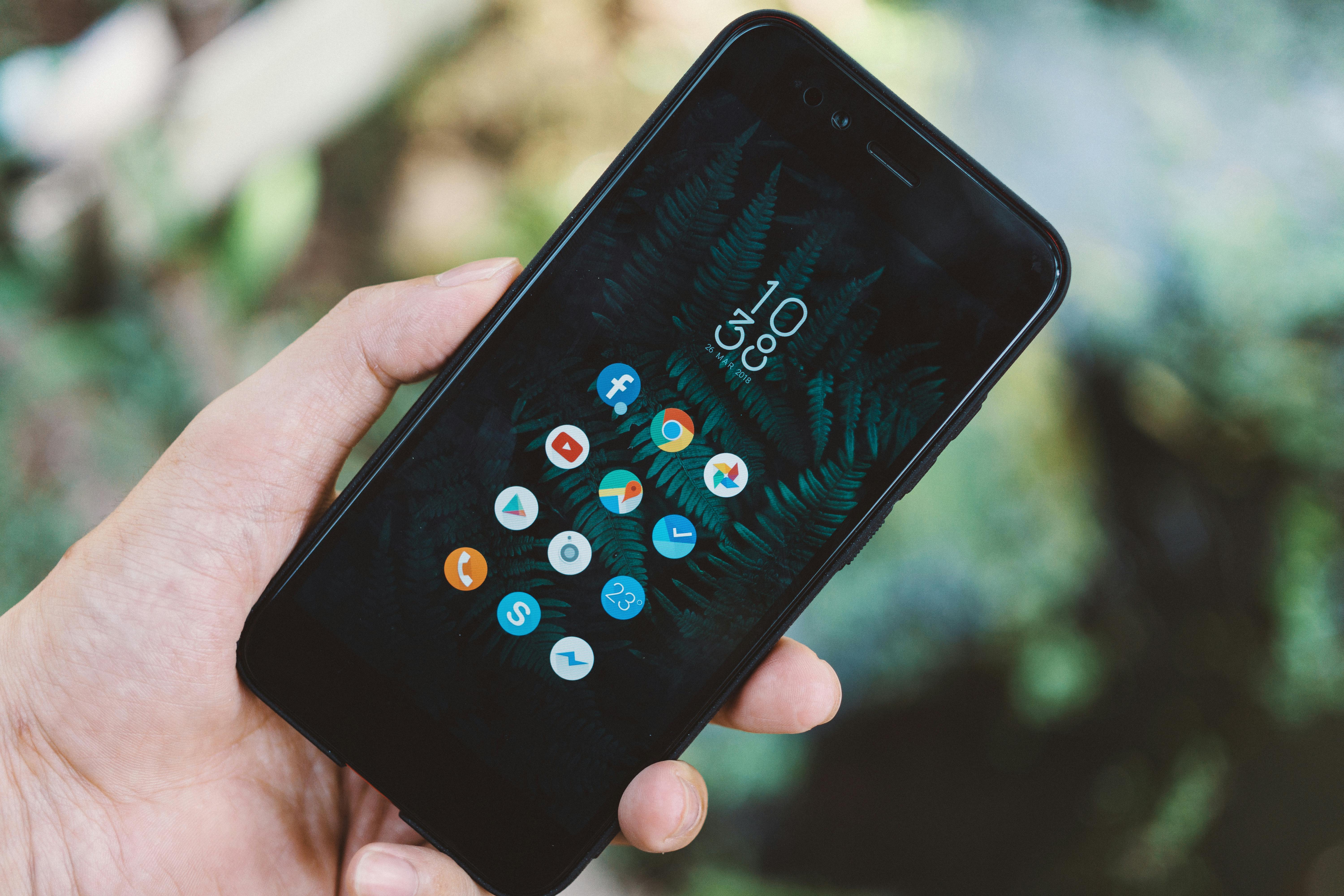
Discover the future of mobile computing with AI-powered XR smartphones in 2026. From hyper-personalized experiences to immersive mixed reality, we deep-dive into the top models, compare features, and help you find the best AI phone for unparalleled performance and innovation. Get ready to upgrade your digital life!
Introduction to the Topic
Welcome to 2026, a year where the smartphone has transcended its traditional role, evolving into an indispensable gateway to an augmented, intelligent world. Forget mere communication devices; today's smartphones are powerful AI companions, seamlessly blending our physical reality with digital overlays through advanced Extended Reality (XR) capabilities. At techeology.com, we've witnessed the rapid acceleration of these technologies, and it's clear: the convergence of Artificial Intelligence and Extended Reality is not just a trend; it's the defining paradigm shift for mobile technology this decade. This isn't just about better cameras or faster processors; it’s about a device that understands you, anticipates your needs, and transforms how you interact with information, entertainment, and the very world around you. If you're looking to upgrade, understand the market, or simply peer into the near future of personal tech, you've come to the right place. We'll explore how these AI-powered XR marvels are reshaping our digital lives and guide you through the best options available today.
Backgrounds & Facts
The journey to the AI-powered XR smartphone of 2026 has been a fascinating one, built on decades of innovation. While rudimentary AI assistants and augmented reality apps existed in the early 2020s, they often felt like novelties rather than integral experiences. The limitations were clear: insufficient on-device processing power, rudimentary sensor arrays, and the sheer bulk of dedicated XR headsets. But the last few years have seen a Cambrian explosion of advancements.
Central to this revolution are the next-generation mobile AI chipsets – think the 'Snapdragon Gen 5 AI' or 'Apple A19 Bionic AI' – which boast Neural Processing Units (NPUs) capable of quadrillions of operations per second. This immense power allows for sophisticated on-device AI models, enabling real-time, privacy-preserving processing of complex tasks, from hyper-accurate voice and gesture recognition to instantaneous environmental mapping and object detection. These aren't just faster chips; they're fundamentally different architectures designed for intelligent computing.
Alongside processing power, display technology has made monumental leaps. We're now seeing mainstream adoption of micro-LED and advanced OLED panels offering unprecedented brightness, color accuracy, and refresh rates, crucial for smooth XR experiences. Furthermore, integrated light field displays and holographic projection capabilities are beginning to appear in flagship models, paving the way for truly spatial computing without external accessories. Sensor arrays have also become incredibly sophisticated. Lidar 3.0 sensors provide centimeter-level depth mapping, while advanced haptic feedback systems and integrated brain-computer interface (BCI) preliminary sensors are enhancing interaction beyond touchscreens. These combined technologies allow for seamless, real-time overlay of digital information onto the physical world, creating truly immersive mixed reality experiences.
The shift is also conceptual: from a device running discrete 'apps' to one hosting 'AI agents' or 'contextual assistants' that learn your preferences, anticipate your needs, and intelligently manage your digital interactions. These agents can proactively book appointments, summarize complex documents, generate creative content, or even guide you through a city with dynamic, context-aware AR overlays. This isn't just a phone; it's your personal digital co-pilot, constantly optimizing your world.
Expert Opinion / Analysis
“The smartphone of 2026 isn't merely a tool; it's an extension of our cognition and perception,” states Dr. Anya Sharma, Lead Futurist at TechVision Labs. “What we’re witnessing is the democratization of advanced AI and XR, moving from niche enterprise applications to everyday consumer devices. The key enabler has been the ability to perform complex AI tasks on-device, ensuring privacy, speed, and responsiveness that cloud-based solutions alone couldn't deliver.”
Dr. Sharma emphasizes the transformative impact on productivity and entertainment. “Imagine walking through a foreign city, and your phone's XR display instantly translates street signs, provides historical context for buildings, and even highlights the best-rated café, all without pulling your attention away from your surroundings. Or consider remote collaboration where colleagues appear as lifelike holograms in your living room, interacting with virtual objects as if they were physically present. These are not distant dreams; they are current realities for flagship AI-XR smartphones.”
However, the rapid advancement isn't without its considerations. “The ethical development of AI, particularly concerning data privacy and algorithmic bias, remains paramount,” Dr. Sharma cautions. “As these devices become more deeply integrated into our lives, learning our habits and making autonomous decisions, manufacturers bear a significant responsibility. Users, too, must be educated on managing their digital footprint and understanding the capabilities of their AI companions. The 'always-on, always-learning' nature of these devices offers incredible convenience but demands a new level of digital literacy and trust.” She concludes, “The brands that succeed in 2026 and beyond will be those that not only push technological boundaries but also build trust through transparent and ethical AI practices.”
💰 Best Options in Comparison (VERY IMPORTANT)
With the market flooded with impressive AI-XR devices, choosing the right one can be daunting. We’ve meticulously evaluated the top contenders for 2026, focusing on their AI integration, XR capabilities, overall performance, and value. Here are our top picks for the best AI-powered XR smartphones:
- Apple iPhone 18 Pro Max AI: The Seamless Ecosystem King
Apple continues to refine its tightly integrated ecosystem, and the iPhone 18 Pro Max AI is the pinnacle of this strategy. Powered by the A19 Bionic AI chip, it offers unparalleled on-device AI processing for privacy-focused personalization and a butter-smooth XR experience through ARKit 7.0. Its advanced Micro-LED ProMotion XDR display, with dynamic refresh rates up to 240Hz, makes AR overlays incredibly fluid. Expect industry-leading computational photography and a suite of AI-driven productivity tools that anticipate your needs across all your Apple devices. Ideal for users seeking a premium, secure, and effortlessly integrated experience. - Samsung Galaxy S27 Ultra XR: The Foldable Innovator & Cloud-AI Powerhouse
Samsung's flagship for 2026 pushes boundaries with its third-generation flexible display technology, allowing for a truly immersive, expansive XR canvas. The Galaxy S27 Ultra XR leverages a hybrid AI approach, combining its powerful Exynos Gen 5 AI NPU with robust cloud-AI integration for advanced generative AI tasks and real-time language translation. Its enhanced DeX-XR mode transforms the phone into a portable XR workstation, projecting a multi-monitor setup into your environment. Perfect for power users, creators, and those who demand versatility and cutting-edge display tech. - Google Pixel 11 Pro AI: The Intelligent Imaging & Assistant Maestro
Google's Pixel series has always been synonymous with intelligent software, and the Pixel 11 Pro AI elevates this to new heights. Equipped with the Tensor 7 AI chip, it excels in on-device machine learning, particularly for computational photography (think light field capture and dynamic reframing) and hyper-personalized AI assistants. Its ARCore 8.0 integration delivers incredibly stable and feature-rich augmented reality experiences, from interactive navigation to real-time object manipulation. If you prioritize groundbreaking camera tech, a pure Android experience, and the smartest assistant on the planet, the Pixel 11 Pro AI is your go-to. - Fairphone 8 AI-XR: The Sustainable & Smart Choice
Proving that sustainability doesn't mean sacrificing innovation, the Fairphone 8 AI-XR delivers a compelling package. Featuring a modular design for easy repairs and upgrades, it now integrates a competitive mid-range AI chipset optimized for efficient on-device processing. While its XR capabilities might not match the raw power of flagships, it provides a solid foundation for everyday AR experiences and smart assistant features, all within a transparent and ethically sourced framework. An excellent choice for eco-conscious consumers who want smart tech without compromise.
Key AI-XR Smartphone Comparison (2026)
| Feature | Apple iPhone 18 Pro Max AI | Samsung Galaxy S27 Ultra XR | Google Pixel 11 Pro AI | Fairphone 8 AI-XR |
|---|---|---|---|---|
| AI Chipset | A19 Bionic AI (On-Device Focus) | Exynos Gen 5 AI (Hybrid Cloud/On-Device) | Tensor 7 AI (Imaging & Assistant Focus) | Optimized Mid-Range AI (Efficiency Focus) |
| XR Integration | ARKit 7.0, Micro-LED ProMotion XDR | DeX-XR, Foldable Light Field Display | ARCore 8.0, Intelligent AR Tracking | Solid AR Experience, Eco-focused |
| Display Technology | 6.9" Micro-LED ProMotion XDR (240Hz) | 7.8" Foldable LTPO Light Field (180Hz) | 6.7" OLED XDR (120Hz) | 6.5" AMOLED (90Hz, Repairable) |
| Battery Life (Est.) | Up to 30 hours (Mixed Use) | Up to 28 hours (Mixed Use) | Up to 26 hours (Mixed Use) | Up to 24 hours (User Replaceable) |
| Camera System | Quad-Lens (50MP Main, Lidar 3.0, AI Photo & Video) | Penta-Lens (108MP Main, 10x Optical Zoom, AI Director) | Triple-Lens (64MP Main, Light Field Capture, Gen AI Edit) | Dual-Lens (48MP Main, AI Scene Optimization) |
| Price Range (Est.) | Starting at $1299 | Starting at $1399 | Starting at $999 | Starting at $799 |
| Unique Selling Proposition | Unrivaled Ecosystem & Privacy-First AI | Flexible Display Innovation & Hybrid AI Power | Best-in-Class Computational Imaging & Assistant | Ethical Sourcing & User Repairability |
Outlook & Trends
Looking beyond 2026, the trajectory of AI-XR smartphones points towards even deeper integration with our daily lives. We anticipate the evolution of AI agents into truly autonomous digital twins, capable of managing complex schedules, creative tasks, and even emotional support, learning and adapting with unprecedented nuance. The distinction between owning hardware and subscribing to AI services will blur further, with personalized AI models potentially becoming a subscription feature.
The role of 6G connectivity, expected to be in early deployment by the late 2020s, will be crucial. Its ultra-low latency and massive bandwidth will unlock truly synchronous, photorealistic XR experiences, making the 'metaverse' accessible and practical directly from our pockets. Expect advancements in neural interfaces and haptic feedback to move beyond rudimentary input, allowing for more intuitive and immersive interaction with digital content. Imagine controlling your AR environment with subtle thoughts or feeling the texture of a virtual object. These are not sci-fi fantasies; they are active areas of research and development.
Sustainability will also continue to drive innovation. We'll see more modular designs like the Fairphone, but with flagship-level performance, allowing users to upgrade specific components (like AI NPUs or camera modules) rather than replacing the entire device. This commitment to longevity, combined with energy-efficient AI processing, will be vital for the industry's environmental footprint. The ethical framework around AI, data privacy, and digital well-being will remain a critical conversation, shaping regulations and consumer trust as these intelligent devices become ever more central to human experience.
Conclusion
The smartphone of 2026 is a testament to human ingenuity, a device that has evolved from a simple communicator into an intelligent, reality-blending companion. AI and XR have converged to deliver experiences that were once confined to science fiction, offering hyper-personalization, immersive entertainment, and unprecedented productivity tools. Whether you prioritize a seamless ecosystem, cutting-edge display technology, intelligent imaging, or ethical sustainability, there's an AI-powered XR smartphone designed to elevate your digital life.
Choosing the right device in this rapidly evolving landscape requires careful consideration of your personal and professional needs. Our comparison of the Apple iPhone 18 Pro Max AI, Samsung Galaxy S27 Ultra XR, Google Pixel 11 Pro AI, and Fairphone 8 AI-XR provides a starting point for navigating these exciting options. The future is here, and it fits in your pocket. Ready to step into the future? Explore the latest deals and pre-order options at our trusted partner retailers today and transform how you connect with the world!